Showing posts with label tattoo lettering. Show all posts

Thursday, June 24, 2010

Script and Tattoo Lettering Designs

Meaningful Art Written In Words

Lettering TattooTattoos using letter and script designs became popular in the past with bikers and incarcerated inmates. But today many people of all walks of life are getting this style of tattoo, making it even more popular. Tattoo enthusiasts find a lot of meaningful usage with letters and script in their designs. Individuals usually get letter tattoos to express something they want to say or hold dear to them. Some people like to add names with script or letters because it is a simple way to represent a statement using words instead of a picture design.

Script letters can be eye-catching and hold deep meanings form the words they use. Individuals like to use letters and script tattoos to convey different messages and even dates of many special occasions. Script and letter tattoos can be used in a commemorating tattoo, a memorial tattoo, an anniversary tattoo, a birth of a baby tattoo and many other special moments in life that people want to have close as a keepsake of remembrance. Quote tattoos are in the same realm using both letters and script. Famous verses from the bible are sometimes tattooed. Well known and common saying such as "Only God Can Judge Me" or quotes from a famous poet are some favorites.

Like most other tattoos, personality is always added to the overall design. The size of the tattoo can be simple and small like adding a name to the banner of a heart tattoo or it can be made huge such as adding a name or a quote along the stretch of the back using big letters from shoulder to shoulder. A script or letter tattoo can be blended with many other tattoo designs also. Using letters and script can make a tattoo design more attractive and appealing.

Finding the right style and font can be easily done by just choosing the one you like the best or your letters can be custom made to your taste. A wide variety of fonts can be found online. A good place to start looking online for cool font ideas for a tattoo is DaFont dot com or you can visit your local library. You can also have your tattoo artist design something to your liking using their own talent and skills.

10 most popular letters and script commonly used for tattoos:


  1. Old English

  2. Tribal

  3. Calligraphy

  4. Cursive

  5. Old School

  6. Roman

  7. Gothic

  8. Handwritten

  9. Celtic

  10. Graffiti

Letters and script tattoos can be inked with bold colors or plain black. Good detail shading adds a lot of character and elegance to the letters making them standout more. Letters can also be decorated with fancy scroll-work to enhance them further, the choice is yours. So if your thinking about getting a new tattoo involving letters and script you should spend a little time on your decision about which style of font is a good choice for you and your tattoo design.

Come see the various popular styles of tattoo fonts and discover more ideas for tattoos.


Article Source: http://EzineArticles.com/?expert=Naipua_Allen

http://EzineArticles.com/?Script-and-Tattoo-Lettering-Designs&id=4460252


Wednesday, January 27, 2010

Tattoo Lettering

Different Tattoo Lettering


By Marya Wordsworth


For centuries people have used images to display their intention for all to see, but, as with any new era, new phenomena appear in the form of tattoo lettering. Italic tattoo lettering is one of the hundreds of font styles for you to choose from. But the Tattoo Letteringitalic font is one that shows the class and most of the way really nice to express yourself.


Popular, but personally, the way that many people choose to enter a letter into the tattoo is to have it in or accompanying the tattoo. That way you can feature the best of both worlds in one tattoo and still have personal meaning you want.


While the most popular and often think of the color that will be used is black, do not limit yourself. Try your favorite color or mixture of colors, even a rainbow in the text, to give you a tattoo italics higher sense of creativity, uniqueness and personality. After all, your tattoo will talk about you and to you for the rest of your life.


Selecting the text what the ink on your body is probably the second most important Tattoo Letteringthing to consider when deciding to get a italic tattoo lettering, the first is the fonts themselves. You want something meaningful and uniquely yours, but at the same time you may not want a tattoo that will either get angry or throw people for a loop when trying to find out what it means and then why did you choose it. That, of course, unless it is your intention.


Another thing that you should put under high consideration is where to put the italic tattoo lettering. Many people, men and women, who choose to have ink on their backs. The main reason is that you're back is the largest and most flat of your body, which makes a great blank canvas for many different tattoos, especially a larger or contain phrases. Women seem to find that tattoo put italics on the back of their lower add a little sex appeal, while men seem to use all of them back to display like that.


However you go, it would be a big piece that you will treasure for the rest of your Tattoo Letteringlife. Do you want your name, your child's name (or the names of your children), your zodiac sign, name your pet, your favorite phrase or anything else you can think of, tattoos italics are the perfect solution for everything.

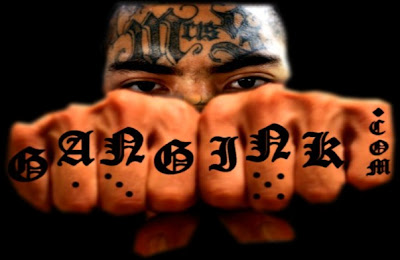


Do not forget to put your mind where you want to put your tattoo italics because that would be a permanent mark for years to come; and, of course, do not forget to be creative in the color or colors you choose. You want to make this something that is yours and yours alone. No matter what you choose to write and where you choose to write, it would be a striking work of art that everyone will enjoy.


Technorati : , ,

Del.icio.us : , ,

Zooomr : , ,

Flickr : , ,

Tattoo Lettering

Different Tattoo Lettering


By Marya Wordsworth


For centuries people have used images to display their intention for all to see, but, as with any new era, new phenomena appear in the form of tattoo lettering. Italic tattoo lettering is one of the hundreds of font styles for you to choose from. But the Tattoo Letteringitalic font is one that shows the class and most of the way really nice to express yourself.


Popular, but personally, the way that many people choose to enter a letter into the tattoo is to have it in or accompanying the tattoo. That way you can feature the best of both worlds in one tattoo and still have personal meaning you want.


While the most popular and often think of the color that will be used is black, do not limit yourself. Try your favorite color or mixture of colors, even a rainbow in the text, to give you a tattoo italics higher sense of creativity, uniqueness and personality. After all, your tattoo will talk about you and to you for the rest of your life.


Selecting the text what the ink on your body is probably the second most important Tattoo Letteringthing to consider when deciding to get a italic tattoo lettering, the first is the fonts themselves. You want something meaningful and uniquely yours, but at the same time you may not want a tattoo that will either get angry or throw people for a loop when trying to find out what it means and then why did you choose it. That, of course, unless it is your intention.


Another thing that you should put under high consideration is where to put the italic tattoo lettering. Many people, men and women, who choose to have ink on their backs. The main reason is that you're back is the largest and most flat of your body, which makes a great blank canvas for many different tattoos, especially a larger or contain phrases. Women seem to find that tattoo put italics on the back of their lower add a little sex appeal, while men seem to use all of them back to display like that.


However you go, it would be a big piece that you will treasure for the rest of your Tattoo Letteringlife. Do you want your name, your child's name (or the names of your children), your zodiac sign, name your pet, your favorite phrase or anything else you can think of, tattoos italics are the perfect solution for everything.


Do not forget to put your mind where you want to put your tattoo italics because that would be a permanent mark for years to come; and, of course, do not forget to be creative in the color or colors you choose. You want to make this something that is yours and yours alone. No matter what you choose to write and where you choose to write, it would be a striking work of art that everyone will enjoy.


Technorati : , ,

Del.icio.us : , ,

Zooomr : , ,

Flickr : , ,

Friday, May 15, 2009

Tattoo Lettering

Japanese Tattoo Lettering - History, Basics, and Style

Tattoo Lettering article by Romeo Rodriguez

In Japan, tattooing and tattoo lettering began primarily as an expression of spirituality. From approximately 300 BC to 300 AD, a Japanese tattoo always conveyed a certain religious meaning for its bearer, and also served as a decorative status symbol.

During this period, tattooing was meticulously practiced and highly regarded. For the tattoo artists, tattooing was not just an occupation, but a way of life. For instance, aspiring apprentices had to train under masters for many years before becoming credible and acknowledged tattoo artists, which are called "horis" in Japan. Only a horis was allowed to create full body suit tattoos.

All that changed when the government began to etch tattoos on criminals as a means of punishment. During the Meiji era, the Japanese government outlawed tattooing and forced artists to practice underground. It was legalized again in 1945, but until now, Japanese tattoos have never completely shaken off the negative association with common felons and the Yakuza, Japan's longstanding infamous mafia. Consequently, people sporting tattoos are known to be banned in many public baths and massage parlors by apprehensive business owners. Despite all this, Japanese tattoos continue to gain popularity domestically and worldwide because of the outstanding artistry of the designs and the deep mystical symbolism inherent to them.

Japanese tattoos are formed using words, images, and numbers, or different combinations of each. There are three kinds of scripts in Japanese:

Kanji - originated from traditional Chinese characters. Intricate and beautiful, these characters are used to convey concepts.

Hiragana - developed during the Heian period by women. It represents sounds, and looks feminine.

Katakana - series of characters developed by Buddhist monks. The style is sharp and masculine, and represents sounds.

Kanji, hiragana, and katakana are combined and used for lettering and can be written vertically and horizontally. Katakana is generally used for foreign names, places, and words that are of foreign origin. For Japanese tattoo lettering, people often use Kanji.

In the same manner as there are different lettering styles in English writing, there are also different writing styles to create Japanese characters. They are:

Kaisho, is the Japanese equivalent of block style.

Gyousho, is the equivalent of cursive style.

Sousho, is an extreme form of cursive, perhaps the equivalent of fancy Old English lettering.

Called "irezumi" and "horimono", Japanese tattoos are stunning but are rather complicated to create because there is no actual alphabet for the Japanese language. Written communication is a group of symbols representing sounds or general concepts. That's why it is so important to find yourself a tattoo artist who has extensive knowledge and expertise with the Japanese language, and its attached symbolism. Before getting a Japanese tattoo, it is best to follow these guidelines:

Know the difference between kanji, hiragana, and katakana.

Familiarize yourself with the writing styles and choose the one that appeals to you the most.

Choose a word that would translate logically into Japanese. Some phrases may be coherent in English (e.g. "Big Daddy) but may be ridiculous when converted to Japanese (e.g. Large Father).

Always remember to check before having any inking done.

Tag to Technorati on Japanese Tattoos and Tattoo Lettering

Tattoo Lettering

Japanese Tattoo Lettering - History, Basics, and Style

Tattoo Lettering article by Romeo Rodriguez

Tattoo Lettering, japanese tattoosIn Japan, tattooing and tattoo lettering began primarily as an expression of spirituality. From approximately 300 BC to 300 AD, a Japanese tattoo always conveyed a certain religious meaning for its bearer, and also served as a decorative status symbol.

During this period, tattooing was meticulously practiced and highly regarded. For the tattoo artists, tattooing was not just an occupation, but a way of life. For instance, aspiring apprentices had to train under masters for many years before becoming credible and acknowledged tattoo artists, which are called "horis" in Japan. Only a horis was allowed to create full body suit tattoos.

All that changed when the government began to etch tattoos on criminals as a means of punishment. During the Meiji era, the Japanese government outlawed tattooing and forced artists to practice underground. It was legalized again in 1945, but until now, Japanese tattoos have never completely shaken off the negative association with common felons and the Yakuza, Japan's longstanding infamous mafia. Consequently, people sporting tattoos are known to be banned in many public baths and massage parlors by apprehensive business owners. Despite all this, Japanese tattoos continue to gain popularity domestically and worldwide because of the outstanding artistry of the designs and the deep mystical symbolism inherent to them.

Tattoo Lettering, japanese tattoosJapanese tattoos are formed using words, images, and numbers, or different combinations of each. There are three kinds of scripts in Japanese:

Kanji - originated from traditional Chinese characters. Intricate and beautiful, these characters are used to convey concepts.

Hiragana - developed during the Heian period by women. It represents sounds, and looks feminine.

Katakana - series of characters developed by Buddhist monks. The style is sharp and masculine, and represents sounds.

Kanji, hiragana, and katakana are combined and used for lettering and can be written vertically and horizontally. Katakana is generally used for foreign names, places, and words that are of foreign origin. For Japanese tattoo lettering, people often use Kanji.

In the same manner as there are different lettering styles in English writing, there are also different writing styles to create Japanese characters. They are:

Kaisho, is the Japanese equivalent of block style.

Gyousho, is the equivalent of cursive style.

Sousho, is an extreme form of cursive, perhaps the equivalent of fancy Old English lettering.

Called "irezumi" and "horimono", Japanese tattoos are stunning but are rather complicated to create because there is no actual alphabet for the Japanese language. Written communication is a group of symbols representing sounds or general concepts. That's why it is so important to find yourself a tattoo artist who has extensive knowledge and expertise with the Japanese language, and its attached symbolism. Before getting a Japanese tattoo, it is best to follow these guidelines:

Know the difference between kanji, hiragana, and katakana.

Familiarize yourself with the writing styles and choose the one that appeals to you the most.

Choose a word that would translate logically into Japanese. Some phrases may be coherent in English (e.g. "Big Daddy) but may be ridiculous when converted to Japanese (e.g. Large Father).

Always remember to check before having any inking done.

Tag to Technorati on Japanese Tattoos and Tattoo Lettering